
Insider Brief
- The Year of Quantum Security 2026 formally launched in Washington with U.S. officials, industry leaders, legal experts, and international diplomats aligning on the view that quantum security is now an active infrastructure and governance challenge rather than a distant technical risk.
- Discussions focused on the long timelines required to migrate cryptography, protect sensitive data with decades-long lifespans, and secure quantum technologies themselves against intellectual property theft, supply chain risks, and cyber intrusion.
- Speakers emphasized that fragmented national approaches and delayed planning could amplify shared vulnerabilities, making early, coordinated action across governments, industry, and global partners essential.
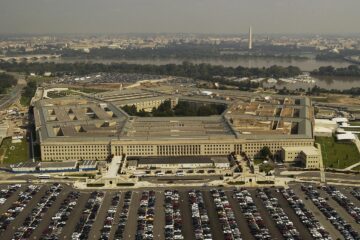
- Photo by Caleb Fisher on Unsplash
As the Year of Quantum Security 2026 (YQS2026) formally began, Washington once again served as a meeting ground for conversations that extend far beyond U.S. borders. On January 12, federal officials, industry leaders, legal experts, and international diplomats gathered to address an issue quietly reshaping the foundations of global digital trust: quantum security.
The gathering set the tone for the year ahead. Rather than centering on declarations or predictions, participants focused on a shared reality—that quantum computing, once largely confined to research labs, is advancing steadily enough that its implications for encryption, intellectual property, and critical infrastructure can no longer be treated as theoretical. Preparation, participants agreed, is no longer optional. But neither is restraint.
That balance defined the day’s discussions. The emphasis was not on when quantum capabilities might mature, but on how long it takes institutions—public and private alike—to adapt systems that underpin finance, communications, healthcare, and government itself. In many cases, those systems are measured not in years, but in decades.
Quantum security has become a global concern precisely because those systems do not stop at national borders. Data flows, encryption standards, and supply chains bind countries together, meaning fragmented approaches can introduce shared vulnerabilities. The presence of international diplomats alongside U.S. stakeholders underscored that point. What happens next in quantum security will be shaped as much by coordination as by computation.
Before industry perspectives took center stage, federal participants outlined the broader landscape shaping today’s quantum security discussions. Taken together, their presentations pointed to a transition already underway—one driven not by speculation, but by policy direction, standards development, and operational planning.
A recurring theme was longevity. Sensitive data encrypted today—whether commercial, personal, or governmental—often must remain secure for decades. That reality, coupled with steady advances in quantum research, has shifted the conversation from distant risk to present responsibility. Migration to quantum-resilient cryptography, speakers emphasized collectively, is not a single upgrade but a multi-year process requiring careful inventories, prioritization, and coordination across complex systems.
Another consistent thread was the cost of delay. Organizations that wait for definitive timelines may find themselves compressed by overlapping transitions—new standards, legacy infrastructure, and procurement cycles converging at once. Early planning, by contrast, allows for phased adoption, vendor alignment, and fewer disruptions. Preparation, the message suggested, is ultimately less expensive—and less destabilizing—than urgency.
The federal perspective also extended beyond cryptography alone. As quantum technologies mature, they themselves have become targets—of cyber intrusion, intellectual property theft, and broader exploitation. Protecting innovation, research environments, and supply chains was framed as inseparable from protecting networks and data. Security, in this view, is not a single discipline but a layered practice spanning cyber, physical, personnel, and operational domains.
Taken together, these contributions set the foundation for the discussions that followed: quantum security as an infrastructure challenge, a governance challenge, and increasingly, a shared international one. The gathering was supported by a small group of organizations focused on coordination across the quantum ecosystem, including the Quantum Industry Coalition which supported the opening convening in Washington.
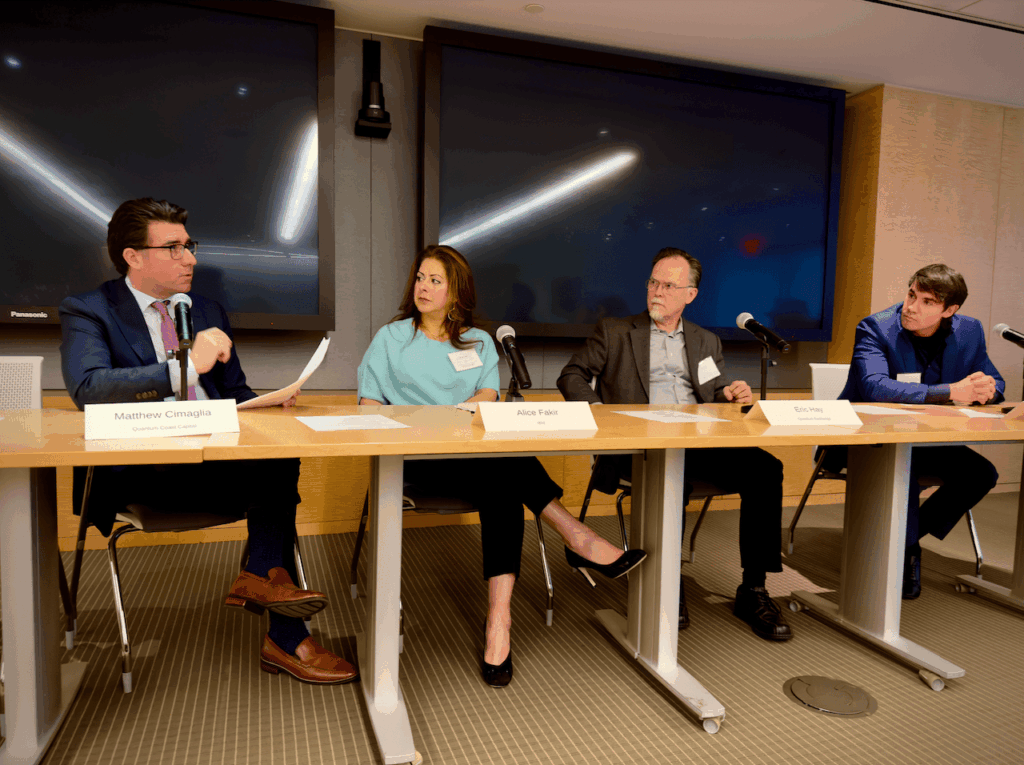
The gathering placed public and private actors in the same room, reflecting the reality that neither sector can address the challenge alone. Among those participating were Matthew Cimaglia of Quantum Coast Capital and Paul Stimers of Holland & Knight, representing perspectives at the intersection of capital, policy, and law. Their presence highlighted how quantum security now touches not only technical teams, but boards, investors, and legal frameworks tasked with managing long-term risk.
Industry voices then addressed the issue from two complementary angles. The first centered on security from quantum—how organizations can protect today’s cryptographic systems as quantum capabilities advance. Participants included Thomas Plumb-Reyes of Google Quantum AI, Alice Fakir of IBM, Keith Wright of Quantum Machines, Eric Hayof Quantum Exchange, and Ryan McKenney of Quantinuum.
Rather than focusing on abstract threat models, the discussion emphasized operational realities: the complexity of migrating cryptographic systems, the challenge of interoperability across legacy infrastructure, and the risks of delaying action until timelines compress. The message was consistent—transitioning to quantum-resilient security is less about sudden disruption than about managing long, interconnected processes that reward early planning.
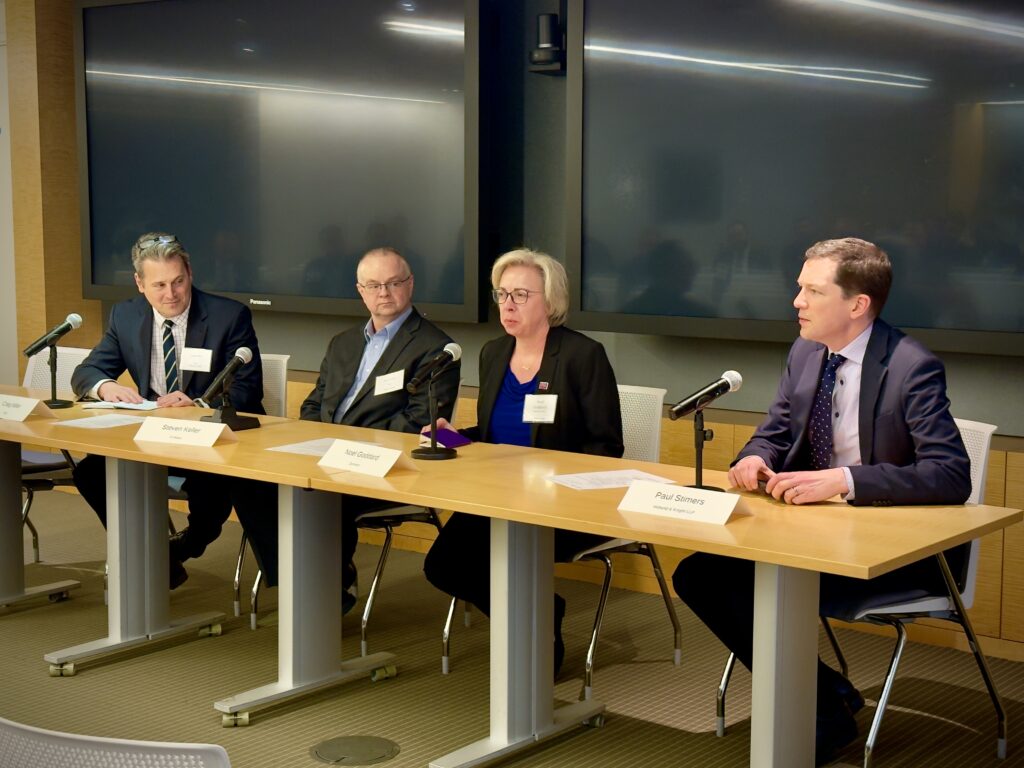
A second discussion turned inward, examining security for quantum—how to protect the technologies, companies, and intellectual property that underpin the field itself. As quantum innovation accelerates, so too does interest from competitors, criminals, and nation-states. Participants included Steven Keller of D-Wave, Craig Miller of IonQ, and Noel Goddard of Qunnect.
Here, the conversation moved beyond cybersecurity alone to encompass research exposure, supply chain integrity, and intellectual property protection in an increasingly competitive global environment. Participants acknowledged a familiar tension: the openness that has historically driven scientific progress now coexists uneasily with strategic concerns about economic and national security. Managing that balance, many suggested, will define the next phase of quantum development.
Throughout the afternoon, what stood out was not a sense of alarm, but of responsibility. There were no sweeping predictions or definitive timelines offered—only a shared recognition that the decisions made in the coming years will shape the durability of digital systems for decades to come. In that sense, the absence of rhetoric was itself a signal that the conversation around quantum security is maturing.
The Washington gathering marked the opening convening of the Year of Quantum Security 2026, a year-long global effort focused on awareness, coordination, and readiness as quantum technologies move closer to practical impact. The initiative is being presented by The Quantum Insider, in collaboration with partners across policy, industry, and investment, with Quantum Coast Capital among those supporting the effort.
Over the coming year, the conversation will continue well beyond Washington. A series of international events is planned to engage governments, companies, researchers, and institutions across regions, reflecting the shared nature of the challenge. Quantum security, as this first gathering made clear, is no longer an abstract future issue. It is an international undertaking now taking shape—deliberately, collaboratively, and with an eye toward what must endure.
0 Comments