Insider Brief
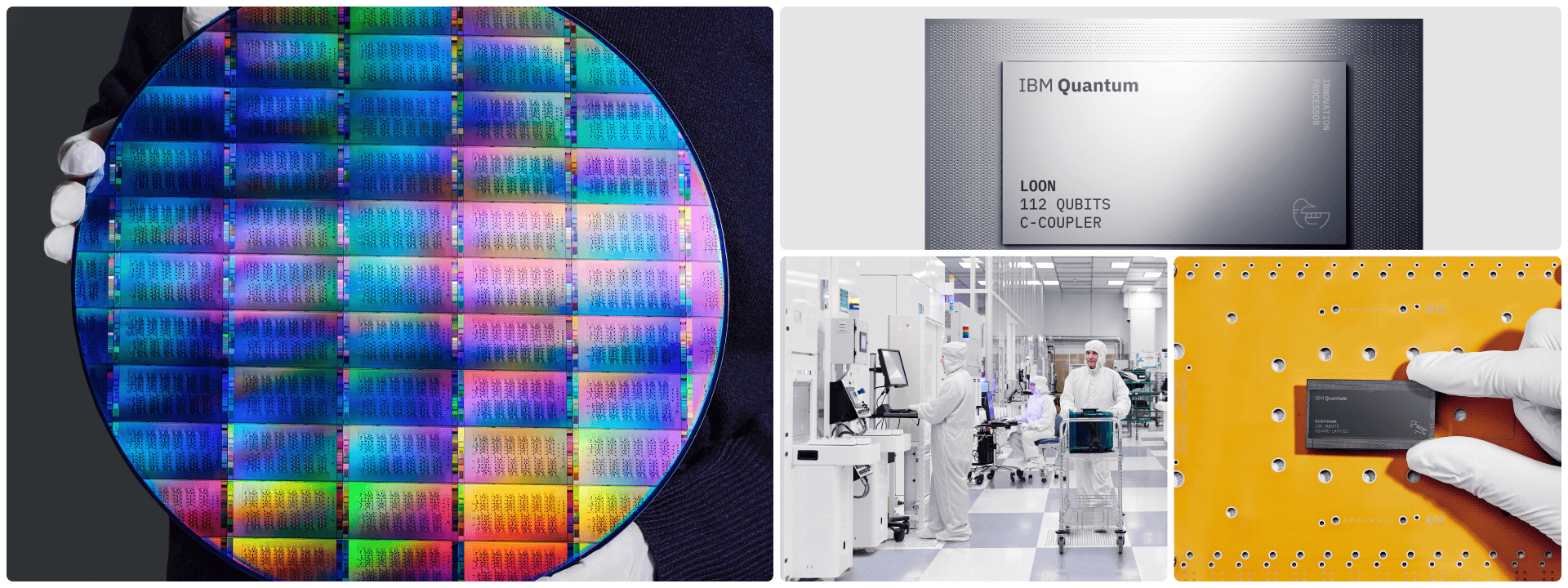
- IBM has released early cloud access to its 120-qubit Nighthawk quantum processor alongside an upgraded Heron system, aiming to support more complex quantum workloads while maintaining low error rates.
- The Nighthawk processor increases qubit connectivity by more than 20 percent over previous IBM systems, enabling circuits with up to 5,000 two-qubit gates and improved coherence, though it remains an exploratory system with temporary limitations.
- IBM’s roadmap projects successive Nighthawk iterations supporting deeper circuits through 2028, potentially reaching 15,000 two-qubit gates using expanded connectivity and long-range couplers.
IBM reported on the early release of two new quantum processors that will give customers a first look at hardware the company says is designed to run more complex quantum programs while keeping error rates in check.
The new 120-qubit processor known as Nighthawk and an upgraded version of IBM’s Heron system reflect IBM’s push to scale quantum machines in measured steps. The systems emphasize reliability and incremental gains rather than headline-grabbing qubit counts, the company added.
IBM said customers on its Premium and Flex cloud plans now have early access to ibm_miami, the first quantum processing unit built on the Nighthawk design. The processor is described as the most advanced IBM has released to date, with a larger and denser network of connections between qubits — the basic units of quantum information — than its predecessors.
Larger, More Connected Processor
Nighthawk contains 120 superconducting qubits arranged in a square lattice, linked by 218 tunable couplers. Those couplers allow pairs of qubits to interact, a requirement for running quantum algorithms. The new layout represents more than a 20 percent increase in connections compared with IBM’s Heron processors, which top out at 176 couplers.
IBM said the denser connectivity allows users to run circuits — or, sequences of quantum operations — that are about 30 percent more complex than those possible on earlier hardware, without sharply increasing error rates. In practical terms, the company said the architecture supports workloads involving up to 5,000 two-qubit gates, the operations that create entanglement and drive most quantum speedups.
The company also reported improvements in qubit stability. According to calibration data released with the system, Nighthawk shows a median energy-relaxation time, known as T1, of roughly 350 microseconds. Longer coherence times allow qubits to retain information for more steps in a computation before noise overwhelms the result.
Exploratory System With Limits
IBM cautioned that ibm_miami remains an exploratory system and is still being tuned. As a result, it comes with temporary constraints. The default repetition time — the pause between runs of a quantum program — has been increased from 250 microseconds to 4 milliseconds, which can raise the amount of machine time needed to complete jobs.
Dynamic circuits, which allow a quantum program to adapt based on intermediate measurement results, are not yet supported, the team added. The quality of measurements taken mid-circuit is also limited. IBM said such restrictions are typical for early-access hardware and will be revisited as testing continues.
Alongside Nighthawk, IBM also expanded access to ibm_boston, its most performant Heron r3 processor to date. That system has demonstrated a two-qubit error rate of about 2.15×10⁻³ across 100 qubits, with dozens of qubit pairs operating below the 10⁻³ error threshold. Lower error rates are critical for running longer circuits and, eventually, for applying error-correction techniques.
IBM said Nighthawk systems are expected to be broadly delivered to users by the end of 2025. The company outlined a roadmap that projects steady increases in circuit depth over the next several years, with future Nighthawk iterations targeting 7,500 two-qubit gates by the end of 2026 and 10,000 gates in 2027.
By 2028, IBM said Nighthawk-based systems could support as many as 15,000 two-qubit gates by extending connectivity to 1,000 or more qubits using long-range couplers. Such couplers, which allow interactions beyond nearest neighbors, were first demonstrated on IBM experimental processors last year.



0 Comments