Insider Brief
- Haiqu raised an $11 million seed round to accelerate development and launch of a hardware-aware quantum operating system designed to run near-term quantum applications at significantly lower computational cost.
- The funding will support continued development of Haiqu’s quantum middleware, which focuses on circuit optimization, error shielding, and software orchestration to mitigate current hardware limitations and enable larger, more practical workloads.
- Haiqu plans to use the capital to validate near-term quantum use cases across industries such as finance, healthcare, aviation, and life sciences, while expanding its team and rolling out early access to its operating system.
PRESS RELEASE — Haiqu, an emerging quantum software company, today announced an $11 million seed round led by Primary Venture Partners, with participation from Qudit Investments led by John Donovan, Alumni Ventures, Collaborative Fund, Silicon Roundabout Ventures, and returning investors Toyota Ventures and Mac Venture Capital.
This fundraise will be used to accelerate the launch of Haiqu’s operating system (OS) for quantum applications: a hardware-aware quantum software stack for running near-term applications at 100x less computational cost than existing solutions.
“Quantum teams need to make empirical progress on hardware to close the gap toward industrially useful quantum applications,” said Richard Givhan, CEO and Co-founder of Haiqu “Today, too little experimentation happens because quantum cloud costs are prohibitive and hardware performance remains insufficient. Our goal is to change that overnight with a software system that can run larger applications at a fraction of the cost. We are grateful to have found investors who recognize the ugly truth: middleware isn’t sexy, but it matters.”
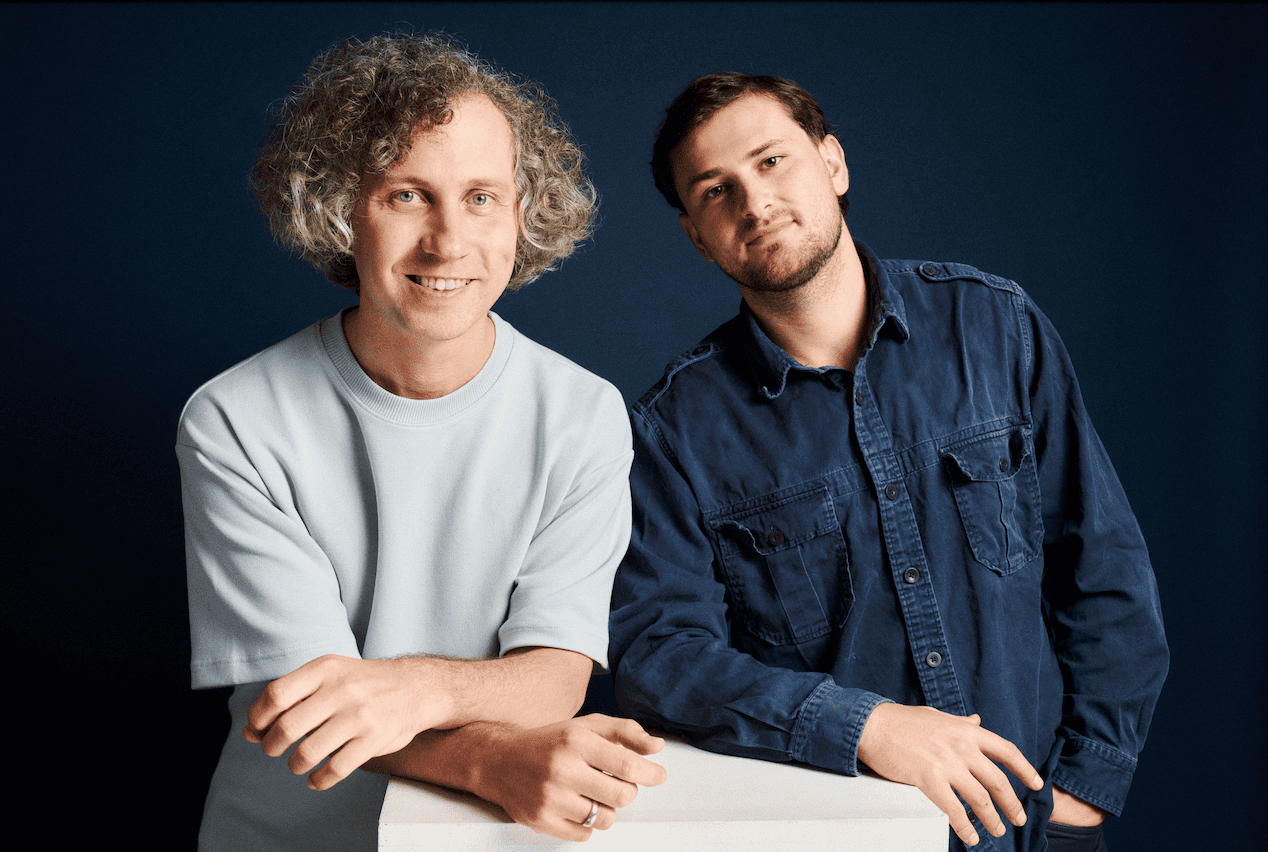
Co-founded in 2022 by Richard Givhan, a Stanford-trained engineer, and Mykola Maksymenko, a former quantum researcher at Max Planck Society and Weizmann Institute, Haiqu develops software that overcomes limitations of modern quantum hardware to execute practical-scale applications today. The company’s quantum software significantly advances middleware through circuit optimization and error shielding, algorithmic subroutines like data-loading, and software orchestration to run more complex applications with significantly fewer resources.
“Quantum computing must demonstrate commercial advantage over classical compute in some domain in order to scale. The premise underlying our investment in Haiqu is that software is essential to realize this goal,” said Brian Schechter, Partner at Primary Venture Partners. “More specifically, quantum hardware needs to operate more noise-resiliently and at greater scale. Haiqu minimizes hardware shortcomings to get the best of what quantum has to offer today and in the many years before we have fully fault-tolerant qubits.”
Schechter notes that the venture capital firm has a portfolio-wide Series A success rate that is more than twice the industry average, along with a proven track record of investing in unicorns such as Alloy, Electric and Noom.
“It is impressive to see the growth in quantum since we first backed Haiqu nearly three years ago. The industry has gone from simulating toy problems to verifiable quantum advantage on niche scientific problems,” said Jim Adler, founder and general partner at Toyota Ventures. “The world will soon realize that useful applications will rely on production-ready software systems which Haiqu has quietly been building. They are already running quantum machine learning at scale over high dimensional data. And that is just one application they support. We are excited by their progress.”
Following work in anomaly detection that was affirmed by IBM and Bank of Montreal (BMO), Haiqu will leverage the funding to continue validating near-term quantum use cases in industries like finance, healthcare, aviation, life sciences, and more.
Haiqu will also use the funding to expand its global team, including the recent hire of Antonio Mei, former Principal Technical PM from Microsoft Quantum, as Lead Product Manager who will lead the launch of Haiqu’s OS.
Researchers are invited to apply for Haiqu’s Early Access Program, a free beta program for its OS now open for select users to develop and run their applications across hardware modalities on Haiqu’s platform. Users can apply for the Early Access Program here.
To learn more about Haiqu and its work in machine learning, computational fluid dynamics and more, please visit the company’s new website.



0 Comments